

In the past decade, we’ve lost many comic book writers and artists who helped lay building blocks for Marvel and DC Comics as we know them today: Artists Neal Adams in 2022 and John Romita Sr. in 2023, former Marvel editor-in-chief Jim Shooter in 2025, and sadly, another name has joined the ranks of the departed. Writer Gerry Conway died this week, as confirmed by his family and Marvel.
Conway was a prolific comic writer at both Marvel and DC in the 1970s through the early ’90s. He has co-creator credits on many important superheroes and villains: Punisher, the Werewolf by Night, Firestorm, Power Girl, Killer Croc, and Jason Todd/Robin II. (While Conway didn’t create the character Carol Danvers, he elevated her into Ms. Marvel with artist John Buscema.)
Journalist Sean Howe’s “Marvel Comics: The Untold Story” states that Conway was considered a “utility player” in his early years at Marvel. He bounced across titles, trying his hand at “Thor,” “Daredevil,” “Iron Man,” and more. He was similarly flexible at DC, writing everything from “Batman” to “Wonder Woman” to “Justice League of America.”
But Conway’s most marvelous impact was definitely on Spider-Man. He was the third person to write “Amazing Spider-Man” after Stan Lee and Roy Thomas, and in issue #121, he famously killed off Peter Parker’s girlfriend Gwen Stacy.
“The Night Gwen Stacy Died” changed superhero comics forever, doing the unthinkable of having a hero fail in a devastating way, resulting in a supporting character dying a real death. The story has been cited as the beginning of comics’ Bronze Age, when stories got darker and more political. Funnily enough, Conway later criticized comics for getting too adult (via SciFiNow), but I think he was absolutely right when he said (via BleedingCool) that Marvel and DC have largely been leaving young people behind to cater to the shrinking demographic of die-hards.
Gerry Conway was the most important Spider-Man writer after Stan Lee
Spider-Man was created as a superhero who could speak to young people. Peter Parker had many of the same problems as a real teenager, and the attitude to go with them. The young outlook of “Amazing Spider-Man” made Conway the perfect person to write it; he was only 19 when he got the job.
By the 1970s, Conway could speak to a teenage audience and write teenage characters much more effectively than Stan Lee could. He could also look at what Lee had built and improve it. Gwen Stacy’s death was not only to add drama, but because Conway rightly recognized there was a much more compelling love interest for Peter waiting to be explored: Mary Jane Watson.
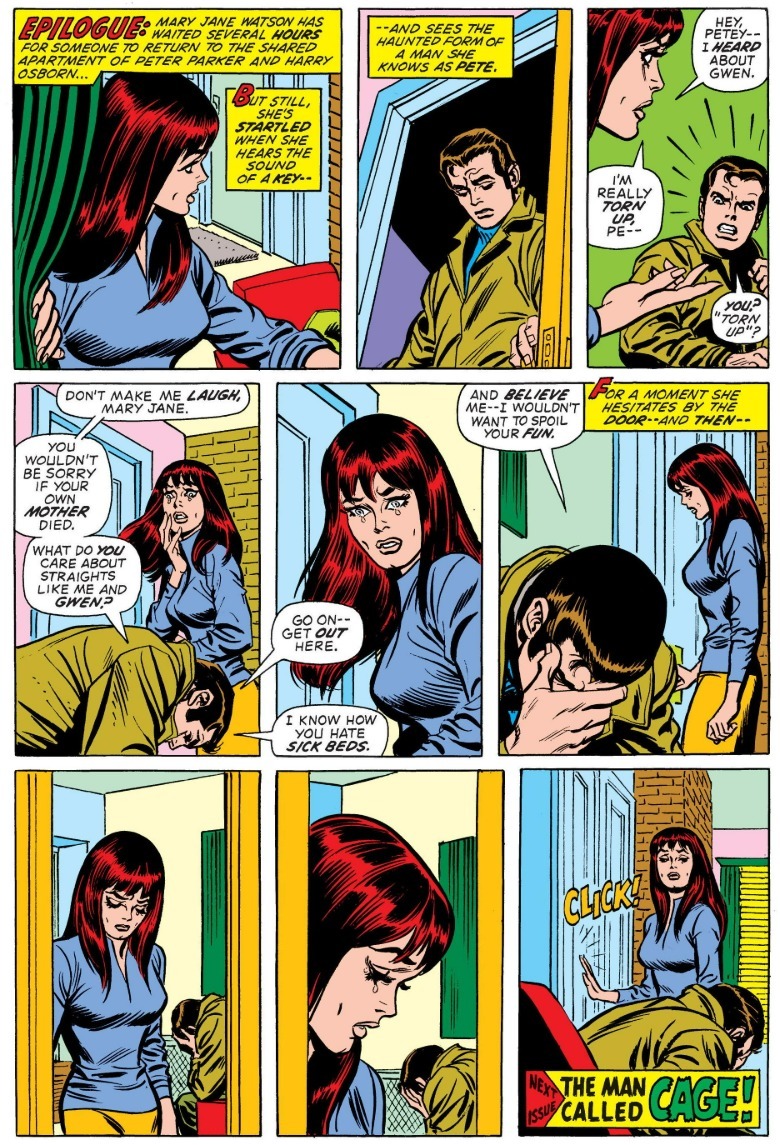
Per “Marvel Comics: The Untold Story,” Conway thought MJ was “probably the most interesting female character in comics,” and it was “a waste” not to have her as the book’s female lead over the blander Gwen. He even ended “Amazing Spider-Man” #122 by MJ choosing to comfort a grieving Peter after he blows up at her, setting them up to grow even closer without Gwen.
 Marvel Comics
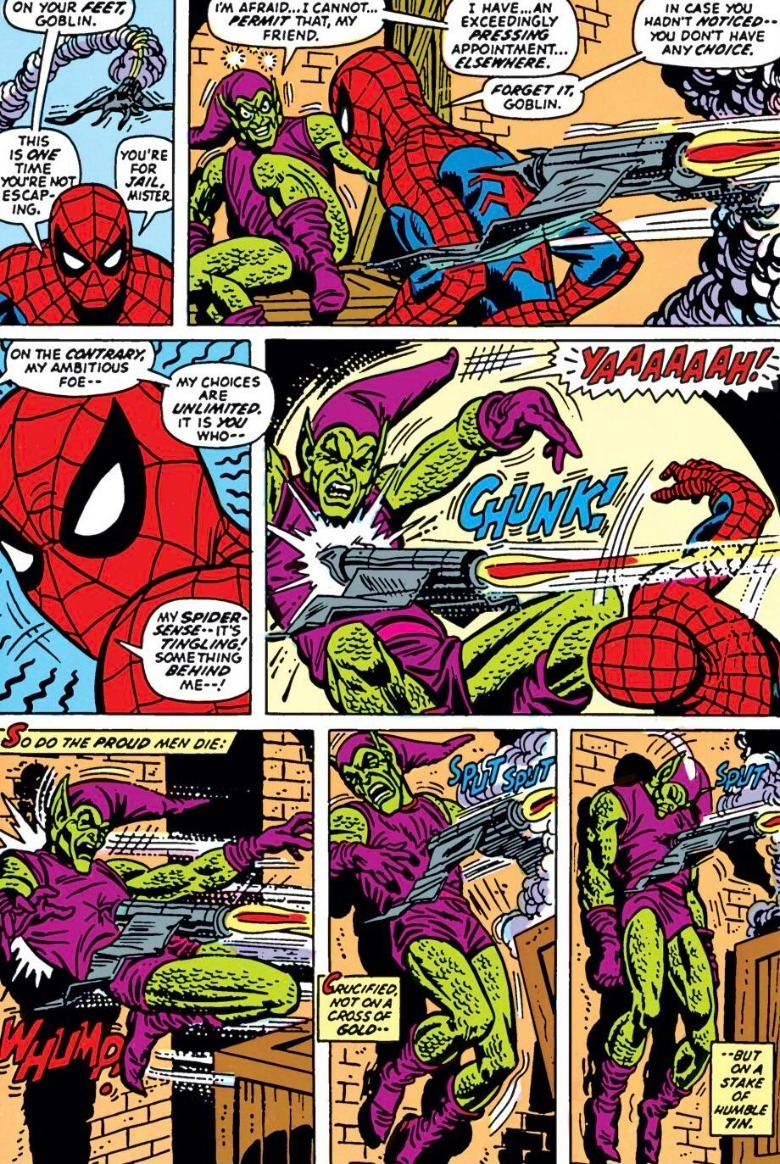
Gwen’s not the only one who dies in that story arc; her murderer, Norman Osborn/Green Goblin, is impaled by his own glider. For this death, Conway crafted some of the greatest prose I’ve ever read in a superhero comic: “So do the proud men die: Crucified not on a cross of gold — but on a stake of humble tin.”
 Marvel Comics
Conway soon brought the Goblin back by having a vengeful Harry Osborn take his father’s identity, escalating the drama further as Peter’s best friend became his enemy. The Sam Raimi “Spider-Man” movies’ centering of MJ and Harry are especially indebted to Conway’s writing.